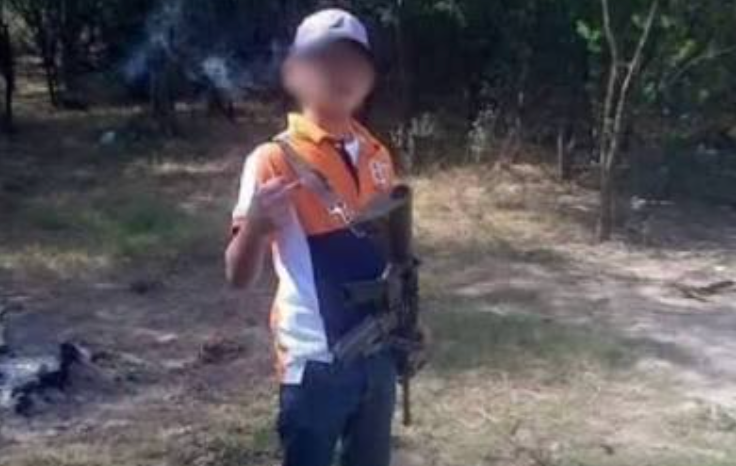



- The defense attorney for Raymundo Francisco N., charged in case 04556/2023, is seeking to modify the current pretrial detention order. The case involves the death of Ángel Moreno, a disabled teenager who died while in state custody at a DIF (National System for Integral Family Development) facility in Nuevo León.
- Tejiendo Redes Infancia warns that modifying the precautionary measure without a strict risk assessment would send a message of impunity in a case documented by the Prosecutor's Office, the CEDHNL and the CNDH as serious human rights violations against a disabled adolescent.
July 7, 2026.- Tejiendo Redes Infancia alerts media outlets, social organizations, human rights defenders and citizens about a hearing requested by the defense of Raymundo Francisco N., accused in judicial case 04556/2023 for acts related to the intentional homicide of the child with a disability, Ángel Moreno.
We emphasize that this hearing cannot be treated as a routine procedure. The Ángel Moreno case is paradigmatic because it raises a central question for the rule of law in Nuevo León: what happens when a child or adolescent dies under the direct responsibility of a public institution that was supposed to protect them?
Ángel did not die in circumstances unrelated to the State. He lived for more than ten years in institutional care, along with his sister, in alternative care facilities under the responsibility of the Nuevo León government and the DIF system. As an adolescent with a disability, he had the right to enhanced protection, to live with a family, to receive professional care, and to grow up free from violence, since all authorities must act under the principle of the best interests of the child.
Recommendation 01VG/2023 from the Nuevo León State Human Rights Commission documented serious human rights violations in the death of 14-year-old Ángel Manuel Moreno, who had multiple disabilities. The CEDHNL concluded in its recommendation that it was a state crime due to the various documented violations: mistreatment, lack of care, negligence, and malicious intent on the part of DIF Nuevo León personnel who attempted to destroy evidence by cremating the body. The Commission also recognized violations of rights such as the right to life, integrity, a life free from violence, health, legality, truth, dignity, the best interests of the child, and the rights of persons with disabilities. Recently, the National Human Rights Commission issued another recommendation regarding the homicide of Ángel Moreno, ratifying the recommendation of its local counterpart.
Therefore, any judicial decision regarding the precautionary measure must consider the full context of criminal case 04556/2023, which includes other high-ranking public officials: Mauricio Miguel N, Alan N, and Miguel Ángel N, for acts constituting intentional homicide and obstruction of justice, linked to the Ángel Moreno case. Impunity remains a threat due to the institutional and political positions of the individuals involved, their capacity to influence witnesses or authorities, the history of cover-up reported by the Prosecutor's Office, the CEDHNL (State Human Rights Commission of Nuevo León), the CNDH (National Human Rights Commission), and the victims; as well as the risk of procedural obstruction, intimidation of indirect victims, and the public impact of a decision that could undermine accountability. All of the above is contrary to the National Code of Criminal Procedure.
The presumption of innocence must be respected at all times. However, this principle cannot be used to disregard the rights of indirect victims to truth, justice, effective judicial protection, full reparation, and guarantees of non-repetition. In cases of institutional violence against children and adolescents in state custody, the judiciary has a heightened duty of diligence, reasoned decision-making, and risk assessment.
The Protocol for judging with a child and adolescent perspective of the Supreme Court of Justice of the Nation recognizes that the best interests of the child imply a reinforced duty of comprehensive protection and that judicial authorities must apply a differentiated, specialized and intersectional perspective when the rights of girls, boys and adolescents are at stake.
Judging from a child's perspective means recognizing that Ángel lacked the necessary conditions to report, protect himself, or escape institutional violence. It also demands preventing the criminal justice system from reproducing the same adult-centric logic that silenced his story for years. Adultcentrism operates as a system of domination that places decision-making and control in the hands of adults and institutions, while subordinating children and adolescents on both material and symbolic levels.
Tejiendo Redes Infancia requests the judge of control:
- First. Reject any substitution of the precautionary measure if the defense does not prove, with objective and sufficient data, that the conditions that justified its imposition have changed.
- Second. Listen effectively to indirect victims and ensure their participation in the hearing.
- Third. Order or require an updated risk assessment that considers procedural obstruction, pressure on witnesses, destruction of evidence, institutional influence, political protection, and revictimization.
- Fourth. To assess Recommendation 01VG/2023 of the CEDHNL as a contextual element on serious human rights violations, institutional responsibility and the duty of non-repetition.
- Fifth. Issue a reasoned and substantiated resolution under human rights standards, children's rights, rights of persons with disabilities and victims' rights.
The people of Nuevo León cannot allow the death of a disabled teenager in state custody to be mired in formalities, delays, and judicial decisions that undermine accountability. The Ángel Moreno case represents an open debt to institutionalized children, to people with disabilities, and to all the families who have reported abandonment, neglect, and violence in spaces that should protect them.
Tejiendo Redes Infancia calls on media outlets, social organizations, human rights institutions, and the public to closely monitor this hearing. What is at stake is not just a precautionary measure: it is the message the Judiciary will send regarding a child's death that occurred under the State's responsibility.
Signature
Weaving Networks for Childhood in Latin America and the Caribbean
Press contact: comunicacion@tejiendoredesinfancia.org